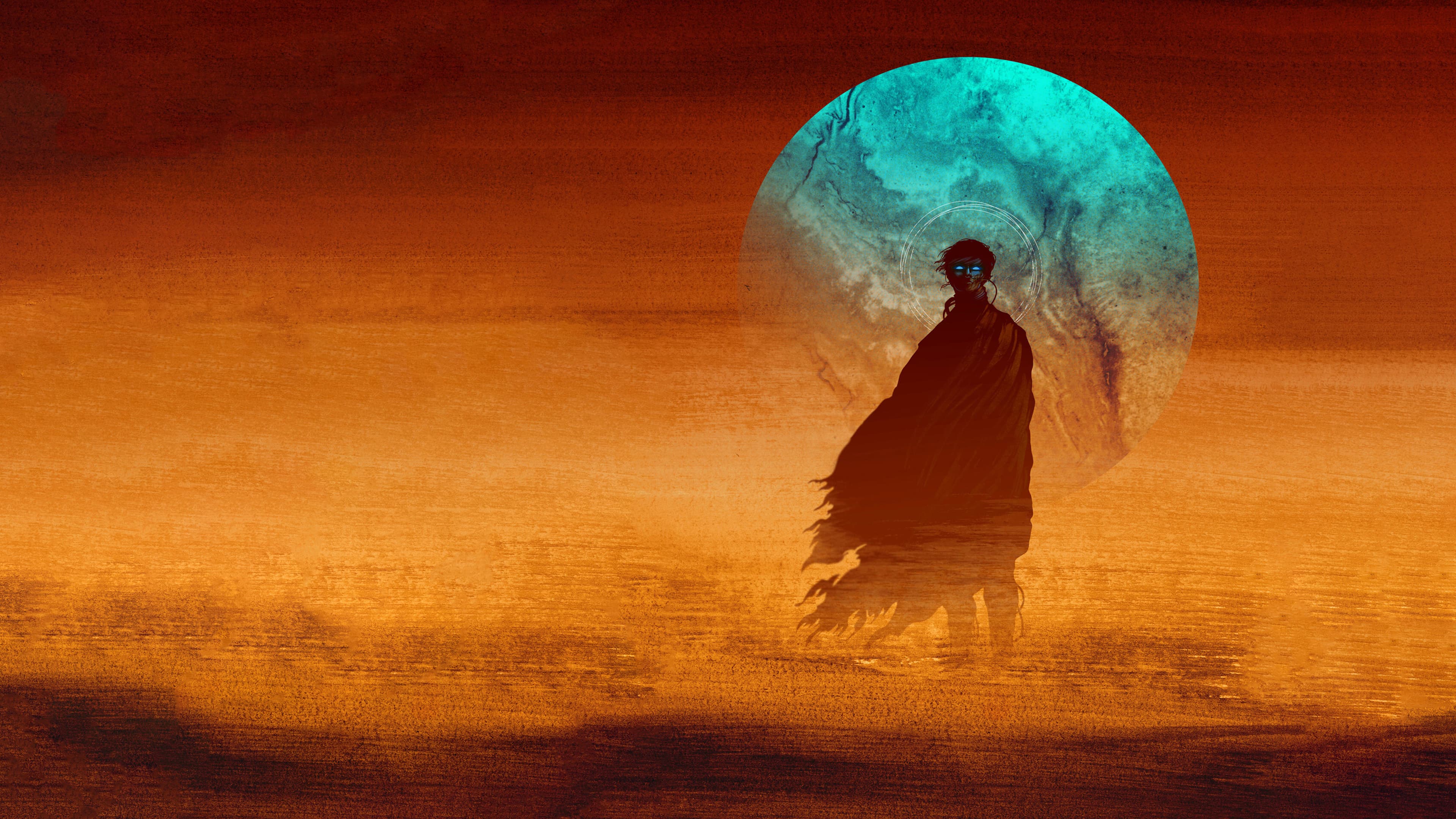
Here's a strange thing to know about the best-selling science fiction novel of all time: twenty-three publishers rejected it. Not a few. Not a handful. Twenty-three. That's not a rough patch — that's an industry-wide consensus that this book had no future. When Dune finally found a home in 1965, it was with a small Philadelphia press that mostly published automotive repair manuals.
The novel went on to win both the Hugo and Nebula Awards in 1966 — the first book in history to sweep both — and has since sold over 20 million copies. Denis Villeneuve's 2024 film adaptation grossed $711 million worldwide. Sixty years after publication, Dune is still expanding.
Why? What does a novel about a desert planet, a precious spice, and a boy messiah have to say to us in 2026? As it turns out: a lot. More than it should. And in ways that should probably make you a little uncomfortable.
So what is Dune, actually?
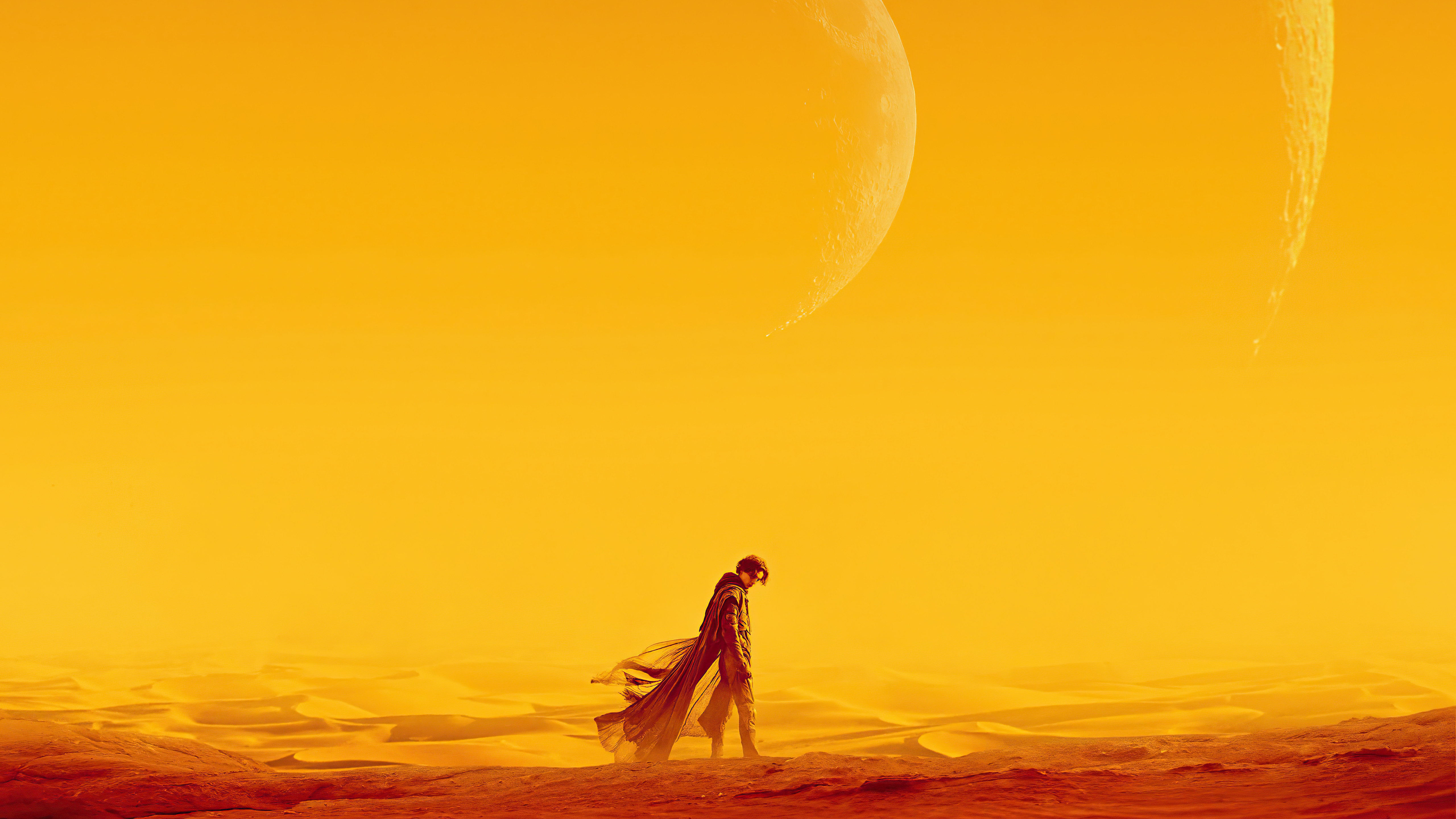
If you've only seen the films — or if you haven't encountered any of this yet — here's the quick version. Paul Atreides is a young nobleman whose family is sent to govern Arrakis, a brutal desert planet with no natural water and no obvious reason to want to live there. But Arrakis is the only place in the universe where "the spice" is found. The spice enables interstellar travel, extends human life, and unlocks near-prophetic states of consciousness. Think of it as the oil, the lithium, and the caffeine of the known galaxy — all in one substance, found only under a desert inhabited by enormous subterranean worms and an oppressed indigenous people who've learned, over generations, to live in perfect harmony with a planet that would kill anyone else.
Paul gets caught up in Fremen resistance, gains their trust, develops abilities from the spice, and leads a revolution. It sounds like a hero's journey — a young man discovers his destiny, defeats the bad guys, earns his throne.
It is not a hero's journey.
Frank Herbert said it plainly: "I was trying to show how easy it is to be led into absolute power by a charismatic leader, no matter how well-intentioned." Paul Atreides — the hero of Dune — is also its villain. And Herbert spent the next twenty years and five more novels making sure you understood that.
Warning #1: the messiah is a product
Here's the part of Dune that will make you look at political rallies differently — and not in a comfortable way.
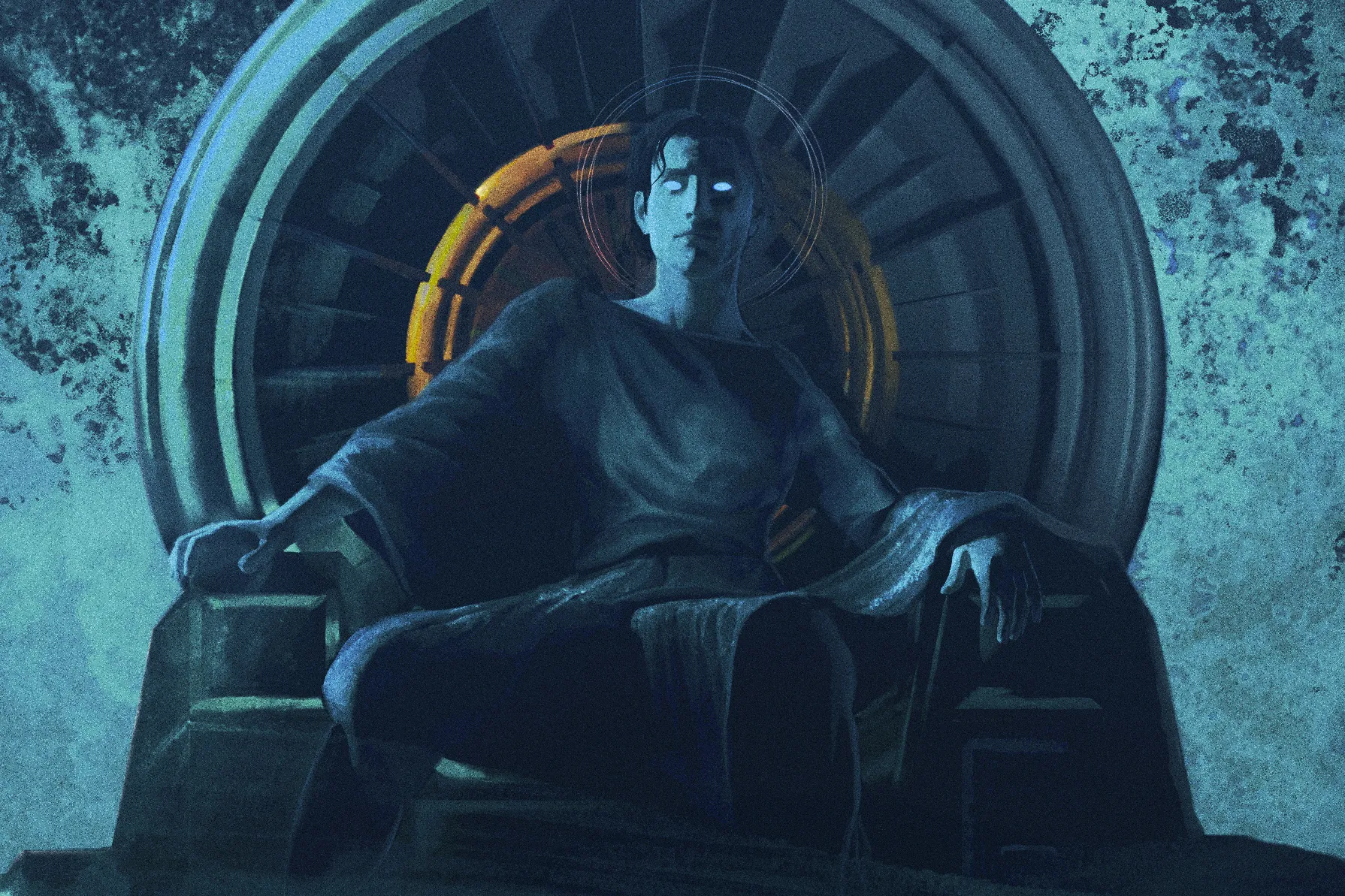
Long before Paul arrives on Arrakis, a secretive sisterhood called the Bene Gesserit has already been there. Not in person — through agents, over generations. They have spent centuries planting myths among the Fremen: prophecies about a chosen one who will come from far away, speak their language, share their gifts, and lead them to salvation. This program is called the Missionaria Protectiva.
Think of it like a marketing campaign where the product won't be ready for a hundred years and the customers don't know they're being sold something. The Bene Gesserit plant the desire first — the hunger for a savior — so that when one of their agents finally arrives, the crowd is already waiting with open arms and a pre-written script.
Paul is that agent. He doesn't create the messiah narrative — he fits into one that was engineered to receive him. He speaks the right words, performs the right feats, checks every box of a prophecy designed to be checkable. The Fremen don't follow him because he is divine. They follow him because they were taught, for generations, to expect someone exactly like him.
The disturbing twist? Paul knows this. His prescient visions show him exactly where it leads: a holy war that will sweep across the galaxy and kill billions. He sees himself becoming something monstrous. And he rides the wave anyway, because survival, revenge, and power win out over his better judgment.
"The bottom line of the Dune trilogy is: beware of heroes. Much better to rely on your own judgment and your own mistakes."
— Frank Herbert, 1979
By the time the sequel, Dune Messiah, picks up, Paul's armies have done exactly what his visions predicted. The "hero's victory" has produced a genocide at cosmic scale. Herbert wrote Dune Messiah specifically because readers of the first book had made the mistake of rooting for Paul. "I was trying to show how people fall prey to their own myths," he said.
You don't need to look far to see this playing out today. The modern political playbook — across continents, across ideologies — involves manufacturing a sense of crisis, pointing at a villain, and presenting a singular strong figure as the only possible solution. The crowd writes the role. The leader fills it. The most dangerous ones aren't the obviously corrupt. They're the genuinely charismatic ones with real convictions — because those are the leaders people will follow all the way into catastrophe, certain that this time it's different.
Herbert described this mechanism in 1965, in a story set 20,000 years in the future. The mechanism is the same.
Warning #2: it's not the robot you should fear
Dune is set roughly 20,000 years in the future — and there are no computers. No AI, no robots, no thinking machines of any kind. This is not an oversight. Thousands of years before the events of the novel, humanity fought a universe-wide holy war against artificial intelligence — the Butlerian Jihad — and outlawed it permanently. The central commandment that emerged was chiseled into every civilization's legal code: "Thou shalt not make a machine in the likeness of a human mind."
To replace what computers did, the Dune universe developed human substitutes. Mentats are people trained from childhood to function as living calculators, capable of complex analysis and logical inference. Guild Navigators are humans mutated by spice who navigate interstellar travel through pure prescience. The Bene Gesserit have trained their bodies and minds to levels that make them seem almost supernatural.
When people encounter this premise, they often assume Herbert was worried about Terminator scenarios — machines becoming conscious and turning on their creators. He wasn't. His concern was far more grounded, and in 2026, far more relevant:
"Once men turned their thinking over to machines in the hope that this would set them free. But that only permitted other men with machines to enslave them."
— Frank Herbert, Dune, 1965
That's not about robots going rogue. That's about who holds the remote.
Think of it this way: electricity is neutral — it doesn't care who it powers. But whoever owns the power grid has enormous leverage over everyone who plugs into it. You can't opt out; the grid is infrastructure now. Herbert's warning about AI follows the same logic. The danger isn't the intelligence itself. It's the concentration of capability in the hands of whoever controls the infrastructure — and everyone else's growing inability to function without it.
In 2026, a handful of technology companies have built AI systems that billions of people depend on for work, for information, for decision-making. Herbert didn't need to predict what the AI would think. He just needed to notice that whoever owns the most powerful tools tends to accumulate power over those who don't. He wrote that sentence in 1965.
He also had a subtler concern, drawn from the philosopher Martin Heidegger: that the tools we use reshape how we think. A hammer doesn't just drive nails — it trains you to see every problem as a nail. What does years of outsourcing memory, analysis, and judgment to a machine do to the humans doing the outsourcing? Herbert's answer, embedded in the Bene Gesserit's rigorous training philosophy, was essentially: let's not find out. The famous phrase "Fear is the mind-killer" isn't just a mantra — it's Herbert's counter-proposal to technological dependency: build the human, don't outsource the human.
Warning #3: Arrakis is Earth
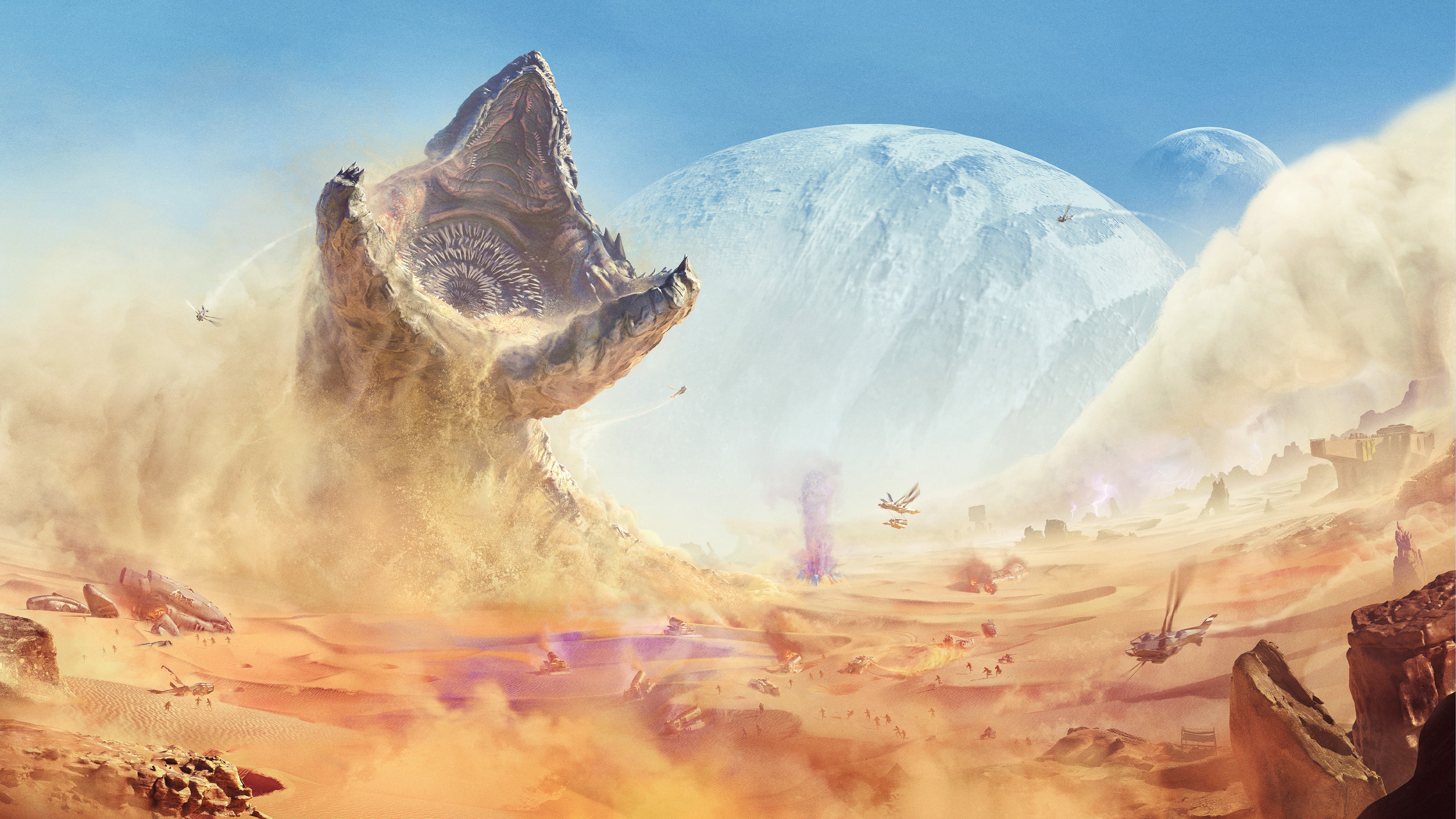
Herbert dedicated Dune "to the dry-land ecologists, wherever they may be." That's not a poetic flourish. It's a thesis statement. The book's deepest subject was never adventure — it was ecology, and specifically what happens when powerful outsiders arrive to extract resources from a land they didn't build and don't understand.
The spice allegory works on two simultaneous levels, both of which have only sharpened with time.
Spice equals oil. The melange spice is produced only on Arrakis, is required for interstellar travel, and controlled by whoever dominates the planet. Every major political conflict in the Dune universe is ultimately a struggle over spice access. Scholar Willis McNelly noted that the series reads as an allegory for the world's dependence on oil. The remarkable part is that Herbert wrote all of this before the 1973 oil crisis — before oil became the defining geopolitical flashpoint of the late 20th century. He didn't predict it because he had special foresight. He predicted it because he understood the underlying logic: a single irreplaceable resource, unevenly distributed, will always generate wars, puppet governments, and ecological sacrifice. That same logic now drives conflicts over lithium, rare earth minerals, and fresh water.
Arrakis equals colonized Earth. The Fremen — Arrakis's indigenous people — have developed a sophisticated, sustainable relationship with an extremely harsh environment over millennia. They waste nothing. Every molecule of water is recovered and recycled. Their entire culture is organized around living with the planet, rather than against it. Then the colonizers arrive. First the Harkonnens, who rule through brute extraction and terror. Then the Atreides, who rule through paternalistic charm — genuinely believing they're helping, genuinely blind to the fact that the fundamental relationship is identical. Different methods; same dynamic.
Herbert's most quietly devastating ecological point comes near the end: the plan to terraform Arrakis — to make it green, to bring rainfall, to make it comfortable for settlers — would destroy the sandworms. No worms, no spice. The colonizers' act of "improvement" would annihilate the very resource they came to extract. Development destroys its own source. He wrote that in 1965, twenty-five years before climate fiction became a recognized genre.
The Fremen's sustainable relationship with Arrakis is the ecologically correct approach. The terraforming plan would destroy the worms and therefore the spice. Development kills the resource it exploits.
— Herbert's ecological thesis, embedded in Dune, 1965
The climate crisis is, in significant part, exactly this pattern playing out in real time: extracting resources at a rate that destroys the systems sustaining them. Indigenous land rights versus extraction industry conflicts — from the Amazon to the Congo — replay the Arrakis dynamic. Herbert saw the shape of it all clearly. He just moved it to a desert planet so we'd pay attention.
Why it gets more relevant, not less
Most novels age. The context they were written for fades, and the themes become historical curiosities rather than urgent problems. Dune has done the opposite. Every decade since 1965, another layer of Herbert's warnings has snapped into uncomfortable focus.
The manufactured messiah is not an ancient problem — it's visible in election cycles right now. The concentration of AI power in the hands of a few companies is the defining economic question of the decade. The climate crisis is, in significant part, exactly the extraction pattern Herbert described. And the "benevolent strongman" argument — the idea that a single leader with the right vision can fix systemic problems faster than democratic institutions — is gaining ground in more countries than it was ten years ago.
Herbert packed all of this into a story that, on the surface, is about a boy with special powers on a desert planet. He then wrote five more novels systematically dismantling every heroic reading of that story, growing more uncomfortable and more pointed with each one. Dune Messiah is the punchline. God Emperor of Dune is where he goes full political philosopher — and it is a deeply unsettling book, in the best possible way.
Villeneuve's films are extraordinary, and Part Two makes Herbert's anti-messianic intent far more explicit than Part One did. But the films compress by necessity. The books are where Herbert makes his full argument — slowly, patiently, across thousands of pages — that this isn't a story about a chosen one. It's a story about what happens to the people who believe in chosen ones.
Twenty-three publishers thought that story had no future. Sixty years later, it keeps being right about ours.
Want to go deeper? Start with the original novel (1965), then read Dune Messiah (1969) immediately after — it's short, and it's the punchline Herbert spent the first book building toward. God Emperor of Dune (1981) is where the political philosophy becomes fully explicit, and it's one of the strangest, most rewarding things you'll ever read. For the films: watch Dune: Part Two (2024) with Herbert's anti-messianic intent in mind — it rewards a second viewing.
Sources
[What is Dune about? — The Washington Post](https://www.washingtonpost.com/books/2024/03/05/dune-series-meaning-interpretation-duncan-idaho/) — Broad analysis of Dune's multiple interpretive layers
[Dune tried to warn us against AI — Popular Science](https://www.popsci.com/technology/dune-ai-warning/) — Analysis of the Butlerian Jihad and its relevance to today's AI power concentration
[Dune's Discomfort with Religion — APA Blog](https://blog.apaonline.org/2026/02/26/dunes-discomfort-with-religion/) — Philosophical analysis of Herbert's religious critique
[Paul Atreides of Dune Is a Messiah-Figure — And a Villain — Sojourners](https://sojo.net/articles/culture-opinion/paul-atreides-dune-messiah-figure-and-villain) — On Herbert's anti-hero warning and manufactured prophecy
[Dune: Part Two Unmasks the Danger of Prophecies — Sojourners](https://sojo.net/articles/culture-opinion/dune-part-two-unmasks-danger-prophecies) — How Villeneuve's film handles the false prophet theme
[The Ecological Prescience of Dune — JSTOR Daily](https://daily.jstor.org/the-ecological-prescience-of-dune/) — Academic analysis of Herbert's ecological framework and oil allegory
[Dune — a prophetic tale about colonial environmental destruction — The Conversation](https://theconversation.com/dune-a-prophetic-tale-about-the-environmental-destruction-wrought-by-the-colonisation-of-africa-170583) — Africa/colonialism parallel and resource extraction allegory
[How Frank Herbert Felt About Star Wars' Dune Influence — CBR](https://www.cbr.com/how-frank-herbert-felt-about-star-wars-dune-influence/) — Herbert's reaction and specific elements borrowed by Lucas
[Everything Star Wars Borrowed From Dune — Nerdist](https://nerdist.com/article/everything-star-wars-borrowed-from-dune/) — Detailed comparison of parallel elements
[Which Fantasy & Sci-Fi Franchises Are Influenced By Dune — CBR](https://www.cbr.com/fantasy-sci-fi-franchises-influenced-by-dune/) — Broader influence across Avatar, GoT, Matrix, Foundation
[Dune's Human Mind vs. AI Themes — CBR](https://www.cbr.com/dune-frank-herbert-human-mind-artificial-intelligence-themes/) — Analysis of Herbert's philosophy on human cognition vs. thinking machines
[God Emperor of Dune: Political Failures — ResearchGate](https://www.researchgate.net/publication/280574216_The_Political_Failures_of_the_Dune_Societies) — Academic analysis of governance and tyranny in the Dune universe