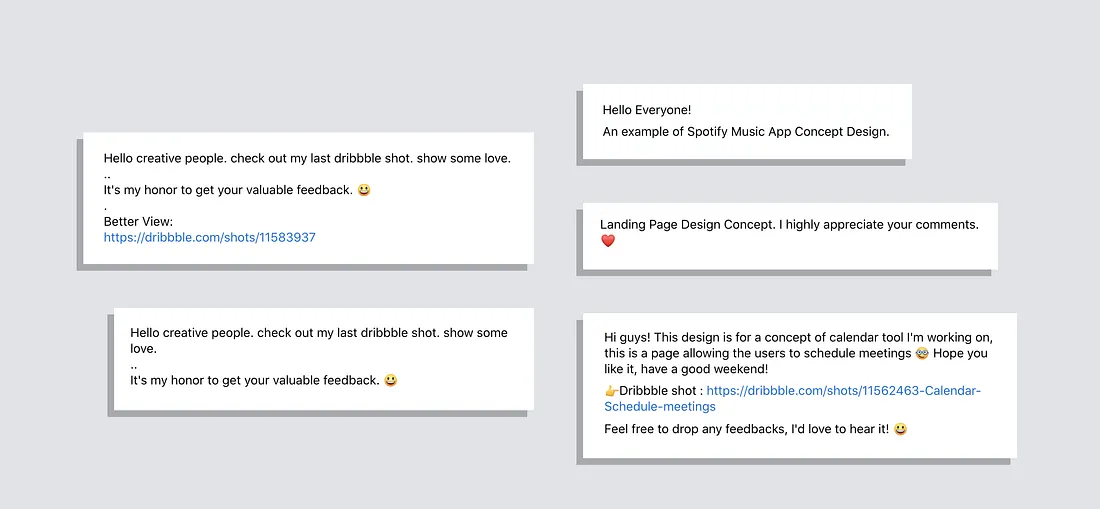
"Hi, please give feedback about my new design exploration"
"I'm new to UI Design, what do you think about my design?"
"I just shared my new shot on dribbble. Please leave a like and feedback"
I frequently read those words in a group of designers without any exact purpose and right context on why you share your design and Dribbble shots in the first place.
What do you exactly expect from other designers to react to your design? Or do you just want to show off?
Design exploration is a special way to get optimal design solutions. They start with the problem you'd like to bring up through some design experiments. If you have no problem to solve, then what's the exact purpose of the design that you've been working on?
You surely don't want your designs to end up meaninglessly just to become a beautiful feed on your Instagram account and Dribbble profile.
So, what do we do?
As a UX Designer, you've been known to be able to communicate your design by telling stories about what comes to be the purpose of your design. By delivering your design in a good way, you might want to give other designers context. Therefore they can give you the right input to improve your design in the future.
Start with the context and background
Tell the reason and background why you bring up the problem with the design solution you're trying to deliver. The context might be as simple as a form of user stories, small-scale research, or user problems that are happening at that time. All you need to do is to deliver everything that refers to the urgency of your design.
Do users find themselves difficult with the current design? Is it complicated for users to fill in the form?
Don't forget to also give a scope on how far you need feedbacks so that designers could understand what to deliver and appraise your design.
Story-tell your design
Make your delivery as meaningful as possible. Tell the process you go through as well as the reason behind the realization of your design so it can meet the goals you expect to achieve as problem solvation.
like a ship without direction or destination, labour without an ideal is fruitless — Mahatma Gandhi
The design goal can become a crucial part because it concerns about whether your design is able to solve the problem that you brought up. The main goal is to get constructive design criticism and feedback on your design proposal.
Why do you need feedback?
Remember, your design solution might not have 100% solved the case. You need constructive feedback from various perspectives so that you can improve the quality of your designs much better.
If you don’t agree with certain feedback, explain your decision seriously but also listen to what the reviewer says. Remember, those who give criticism do it because they want to help you improve as a better designer, so try not to be defensive or take their criticism personally.
Getting the right feedback
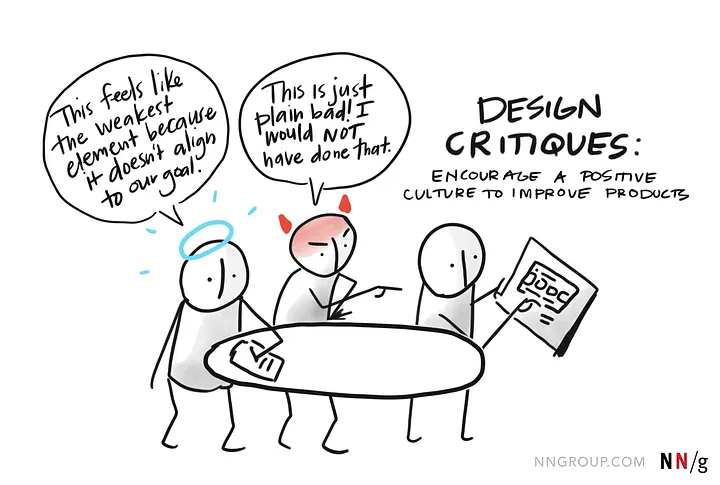
Wait. By delivering your design doesn't mean you've got to take on all the input in the comment section blindly. Sometimes, there are also people who prioritize personal tastes without statements that will not make your design better.
Do an analysis of the given feedbacks, then take those that are constructive that can improve your design quality. As for example…
A question that will not make your design better: The layout is bad. I don't like it. Can you make a change?
Constructive question: How will the layout make for users to finish the job faster and more efficiently?
The feedback that will not make your design better: I don't feel like the color and I don't think the button is in the right place. One more thing. It's too crowded.
Constructive feedback: If the goal is for the user to register quickly, I’m afraid that the placement of the element is wrong and the main task is invisible because it makes the buttons hard to find.
Takeaways
By giving the right design context comes a great chance for designers to learn and improve better.
We make mistakes and that's good. Because of them, we're truly learning.