During my college years, I had the opportunity to work on an exciting and meaningful project for my thesis. I was tasked with developing a Kinect-based rehabilitation game that aimed to improve the motivation of patients to recover. As a member of the team, I took on the responsibility of designing the game’s visual interface and technical aspects, as well as incorporating gamification elements to enhance its effectiveness. It was a challenging project, but it was also incredibly rewarding to see how the game was able to inspire and motivate patients to engage in their rehabilitation process. This experience taught me a great deal about the power of gamification in driving behavior change and inspired me to continue exploring this field.
So what is gamification in product design?
Gamification is the integration of game mechanics and design elements into non-game contexts, with the goal of increasing engagement, motivation, and behavior change. In recent years, gamification has become increasingly popular across a wide range of industries, from education and healthcare to marketing and employee training. This is due to its ability to tap into basic human motivations and behaviors, such as competition, achievement, and social interaction, in order to drive desired outcomes.
One of the most important reasons why gamification is important is its ability to increase engagement and motivation. By adding game elements such as points, badges, and leaderboards, gamification can transform mundane or repetitive tasks into engaging and enjoyable experiences. This is especially important in fields such as education and healthcare, where motivation and engagement can have a significant impact on outcomes.
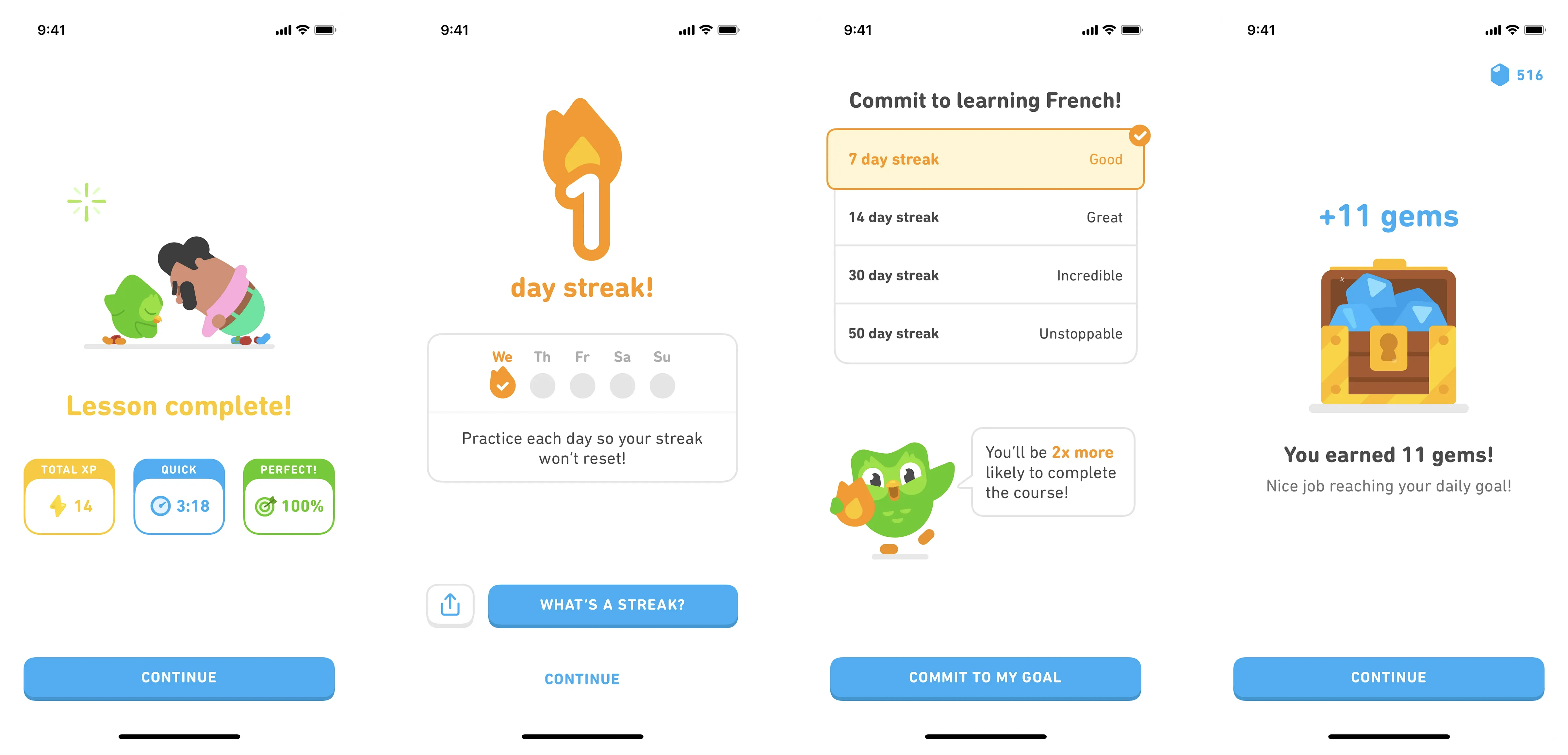
For example, Duolingo: This language learning app uses gamification to engage users and motivate them to learn. Users earn points and progress through levels as they complete language exercises, and can compete with friends to see who can achieve the highest scores.
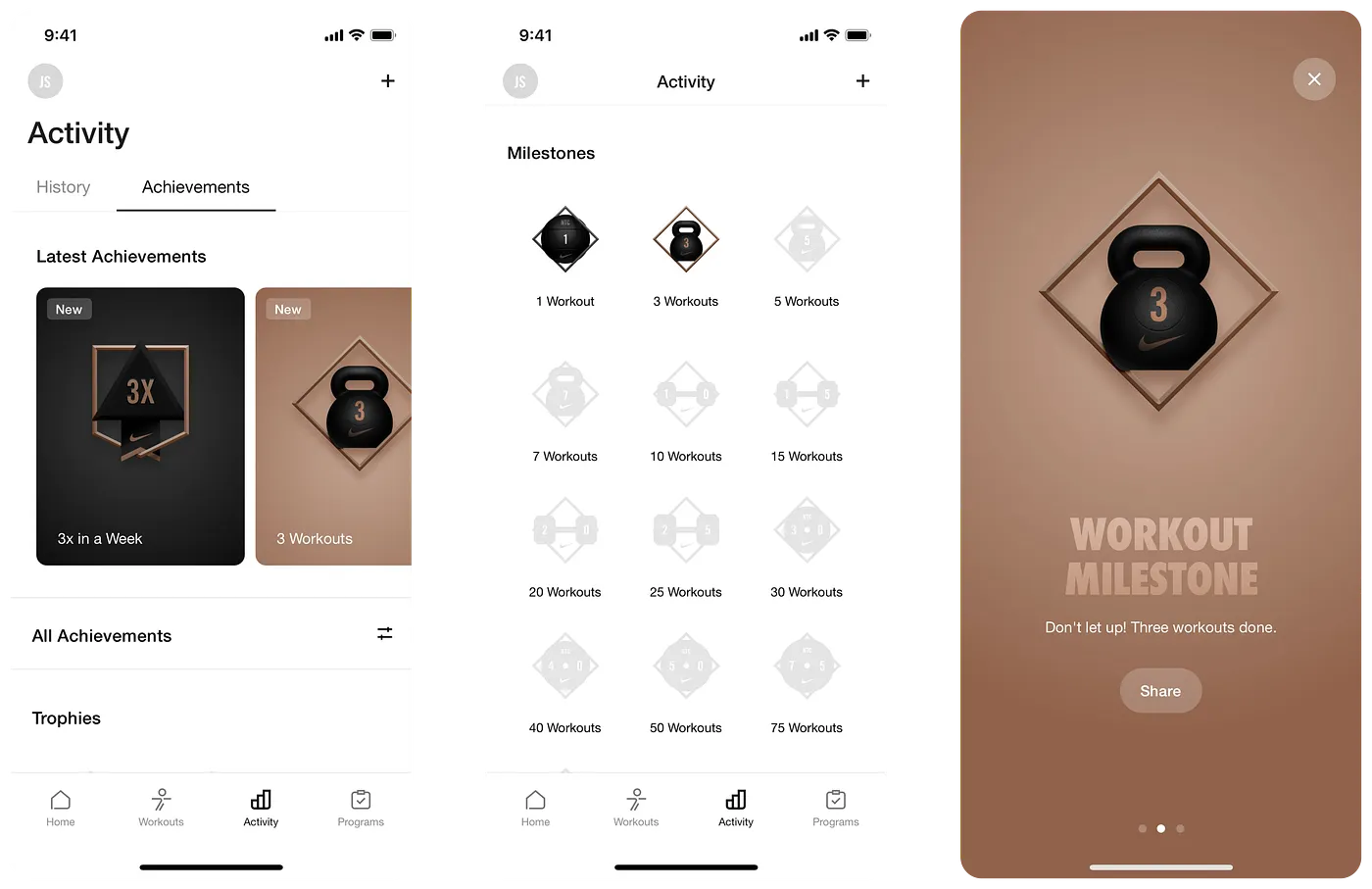
Nike Training Club: This workout app uses gamification to make exercise more fun and engaging. Users can earn badges and unlock new workouts as they complete challenges and reach their fitness goals.
In addition to increasing motivation and engagement, gamification can also drive behavior change. By rewarding desired behaviors and providing feedback on progress, gamification can help individuals adopt new habits and break old ones. For example, a gamified app called “SuperBetter” has been shown to help individuals with chronic pain, depression, and other health conditions by turning their recovery into a game. Users set goals, complete challenges, and receive rewards for their progress, which can help them stay motivated and on track.
Key elements to gamification
There are several key elements to gamification, which are the game mechanics and design principles that make it effective in driving engagement and behavior change. Here are some of the most important elements to consider when designing a gamified experience:
Goals and objectives: Gamification should have clear goals and objectives that users are working towards. These could be completing a task, achieving a milestone, or earning rewards. If the gamified experience feels disconnected from the user’s real-world needs and desires, it is unlikely to be effective.
Rewards and feedback: Gamification should provide feedback to users on their progress and performance, and offer rewards for achieving goals or completing tasks. Rewards can include badges, points, levels, or virtual goods. If rewards feel irrelevant or unattainable, users may become disengaged and lose interest in the experience.
Challenges and obstacles: Gamification should include challenges and obstacles that users need to overcome in order to achieve their goals. These could be puzzles, quizzes, or time-based challenges.
Progression and levels: Gamification should offer users a sense of progression and advancement as they complete tasks and achieve goals. This can be done through levels, rankings, or other forms of progression.
Competition and social interaction: Gamification should incorporate elements of competition and social interaction to motivate users and drive engagement. This can be done through leaderboards, challenges, or social sharing. If the experience feels isolated or disconnected from others, users may lose interest.
Narrative and theme: Gamification can be enhanced by incorporating a compelling narrative or theme that immerses users in the experience. This could be a story, character, or world that users can interact with.
Personalization and customization: Gamification can be more effective if it allows users to personalize and customize their experience. This could include choosing avatars, customizing settings, or selecting preferred rewards. If the experience feels generic or one-size-fits-all, users may become disengaged.
Key motivation tools for creating effective gamified experiences
Susan Weinschenk, a well-known behavioral psychologist, has identified several key motivators that can drive engagement and behavior change in gamification. These motivators are based on fundamental human needs and desires and can be powerful tools for creating effective gamified experiences. Here are some of the key motivators that Weinschenk has identified:
Autonomy: People want to feel in control of their environment and choices. Giving users a sense of autonomy and control over their gamified experience can be a powerful motivator.
Mastery: People want to feel a sense of accomplishment and progress. Providing users with opportunities to master new skills and challenges can be a powerful motivator.
Purpose: People want to feel a sense of purpose and meaning in their actions. Providing users with a clear sense of purpose and connection to a larger goal can be a powerful motivator.
Social interaction: People are social creatures and crave connection with others. Incorporating social interaction into gamification can be a powerful motivator.
Scarcity: People are more motivated by things that are rare or in limited supply. Creating a sense of scarcity or exclusivity in gamification rewards can be a powerful motivator.
Immediate feedback: People want to know how they are doing in real-time. Providing immediate feedback on user performance can be a powerful motivator.
Bonus stage
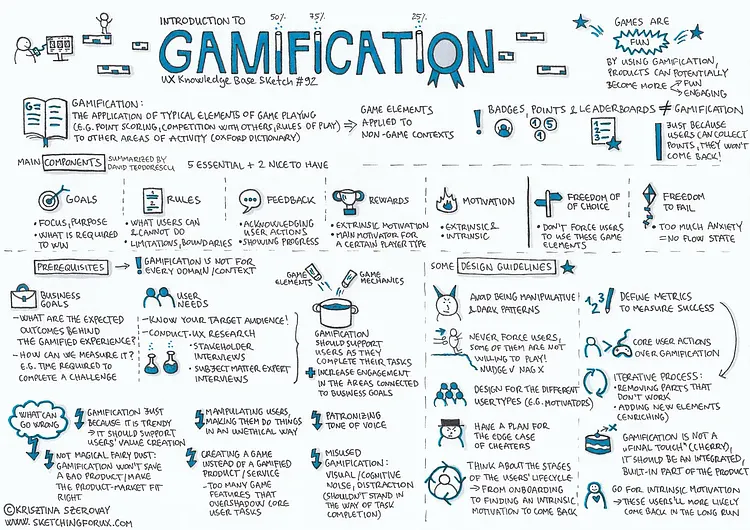
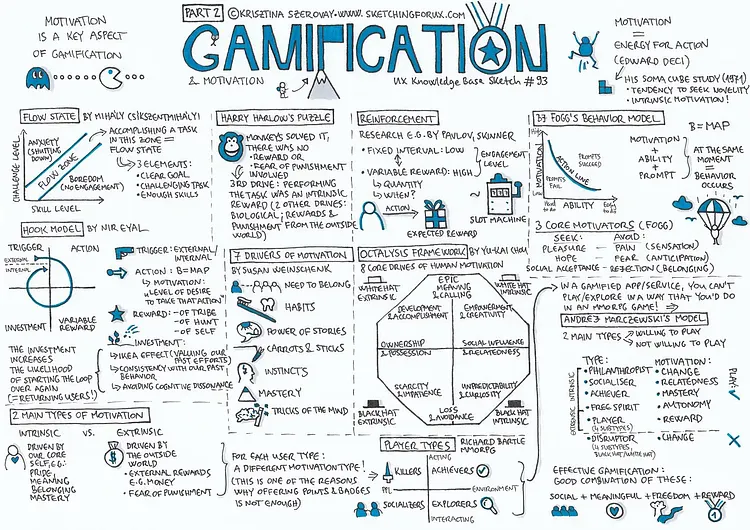
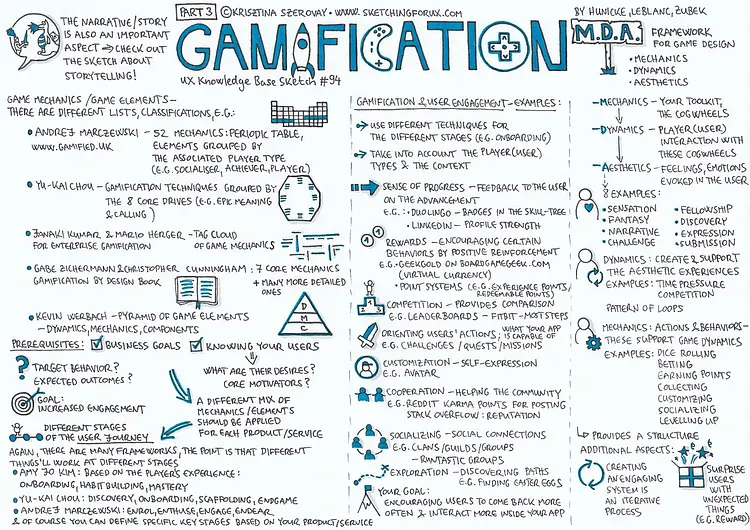
Here are some beautifully sketched summaries about Gamification in product design by Krisztina Szerovay:
Conclusion
In conclusion, gamification is a powerful tool that can be used to drive user engagement, behavior change, and motivation in a wide range of applications. By understanding the key elements of successful gamification design, including clear goals, feedback, progress tracking, social interaction, and rewards, designers, and developers can create engaging and meaningful experiences that resonate with users and drive desired behaviors. However, it is important to avoid common gamification pitfalls, such as relying too heavily on extrinsic rewards, creating overly complex systems, or failing to consider user needs and preferences. With careful planning, thoughtful design, and a deep understanding of user psychology and behavior, gamification can be an effective way to create engaging and impactful user experiences.
If you want to dive deeper into gamification, I suggest you start from
“Gamification by Design” by Gabe Zichermann and Christopher Cunningham
“For the Win: How Game Thinking Can Revolutionize Your Business” by Kevin Werbach and Dan Hunter
“The Gamification of Learning and Instruction” by Karl Kapp
“Actionable Gamification: Beyond Points, Badges, and Leaderboards” by Yu-kai Chou
“Reality is Broken: Why Games Make Us Better and How They Can Change the World” by Jane McGonigal